New yeast, new dough, new year

The holidays bring plenty of good food, especially baked goods.  Warm ovens that hold baking breads, pies or cookies induce long inhales of lovely smells followed by smiles of anticipation.  Anyone who has baked things such as bread from ‘scratch’ knows the importance a small amount of yeast has in leavening the dough.  The verb “leaven” means ‘to permeate and modify or transform something’.  Yeast transforms the dough so that it will produce bread that is light and fluffy in texture.  Without good fresh yeast, the dough fails to rise and the resulting bread is flat, dense, and tough to eat.  When this happens to me, I end up generously sharing it with our family dog, who lately has been getting excited when she sees me with flour, measuring cups, and a mixing bowl.  I don’t take it personally, her ancient and wild ancestors have passed on their instinct to spot an impending easy kill…even a baked one emerging from the oven…but I digress.
dough

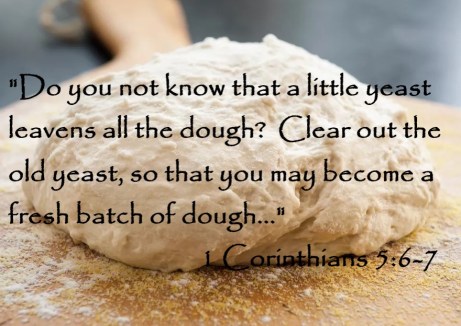
In the New Testament, there are several instances where yeast (‘leaven’) is used to teach us a lesson, mostly warnings about bad behavior.  “Jesus said to them, ‘Look out, and beware of the leaven of the Pharisees and Sadducees‘.” (Matthew 16:6).  In Luke 12:1, Jesus says to his disciples, “Beware of the leaven—that is, the hypocrisy—of the Pharisees”.  However, Jesus compares heaven to yeast in a positive way.  “The kingdom of heaven is like yeast that a woman took and mixed with three measures of wheat flour until the whole batch was leavened” (Matthew 13:33).  The lesson is in realizing what influence the ‘yeast’ of our behavior, good or bad, has on others.  As Saint Paul writes in his first letter to the church in Corinth, “Do you not know that a little yeast leavens all the dough?  Clear out the old yeast, so that you may become a fresh batch of dough, inasmuch as you are unleavened.” (1 Corinthians 5:6-7).  Within ourselves, small undesirable behaviors can lead to larger ones.  Outside of ourselves, our undesirable behaviors can have a negative influence on those around us.

The welcoming of a new year brings resolve and hope to improve our lives.  We try to begin anew as we attempt to leave behind the old yeast of bad behaviors and poor habits.  Clearing out that old yeast as St. Paul instructs us in order to begin as a fresh batch of unleavened dough is indeed a challenge!  It is not enough only to remove the old yeast and end our efforts with that.  We must replace our old yeast with something better or we will not be changed.  In baking, when flour and water are mixed together to create new unleavened dough, that dough inevitably becomes leavened by wild yeast (Interesting fact:  modern Jewish dietary laws mandate unleavened dough must be baked within 18 minutes for the resulting bread to be considered unleavened).  Similarly, if we simply remove old bad behaviors but replace them with nothing, the undesirable behaviors and their effects creep back into our lives.  A stronger prayer life, reading and meditating on Holy Scripture, a more active sacramental life and simply being aware of and avoiding the ‘bad yeast’ around us are just a few of the ways we avoid the return of the old and undesirable yeast in our own life.

We control what type of yeast grows in our new dough of the new year.  Will it be the same old undesirable yeast or will it be the new good yeast of the kingdom of heaven, of which Jesus spoke?  Hopefully it is the new good yeast of the kingdom of heaven, which will leaven us and those who encounter us in the New Year of 2019!


Manger or manager?

A well constructed resume is vital in seeking employment. It is the first look a potential employer has of the job applicant and mistakes such as misspellings or grammar errors do not create a good first impression!

I’ve encountered resumes with errors, usually with a word that is spelled correctly, but is wrong because it is the misspelling of another word intended to be used (e.g.- bee instead of be; to instead of too or two).  A classic example appearing on resumes or cover letters, and one especially appropriate at Christmas, is manger instead of managerManger sneaks into a cover letter or resume masquerading as a properly spelled word even though it is a typo of the intended word manager.  Unfortunately, its appearance in a resume or cover letter can be comical. “I am applying for the position of manger” is great in a cover letter if your career goal is feeding barnyard animals with a bale of hay strapped to your back while down on all fours.  Listing “Store Manger” on a resume leaves the reader wondering if you were in a position of great responsibility or in an extremely low entry level position in the employee break-room, responsible for handing out snacks.

But in our daily lives as Christians, we indeed should be mangers and not managers.  Satan constantly whispers in our ears that we should be in control of all aspects of our lives, to be the managers of our lives.  The notorious Herod the Great (aka- King Herod) is a scriptural example of the extremes to which someone may go to remain the manager in control of their life (Matthew 2:16) .

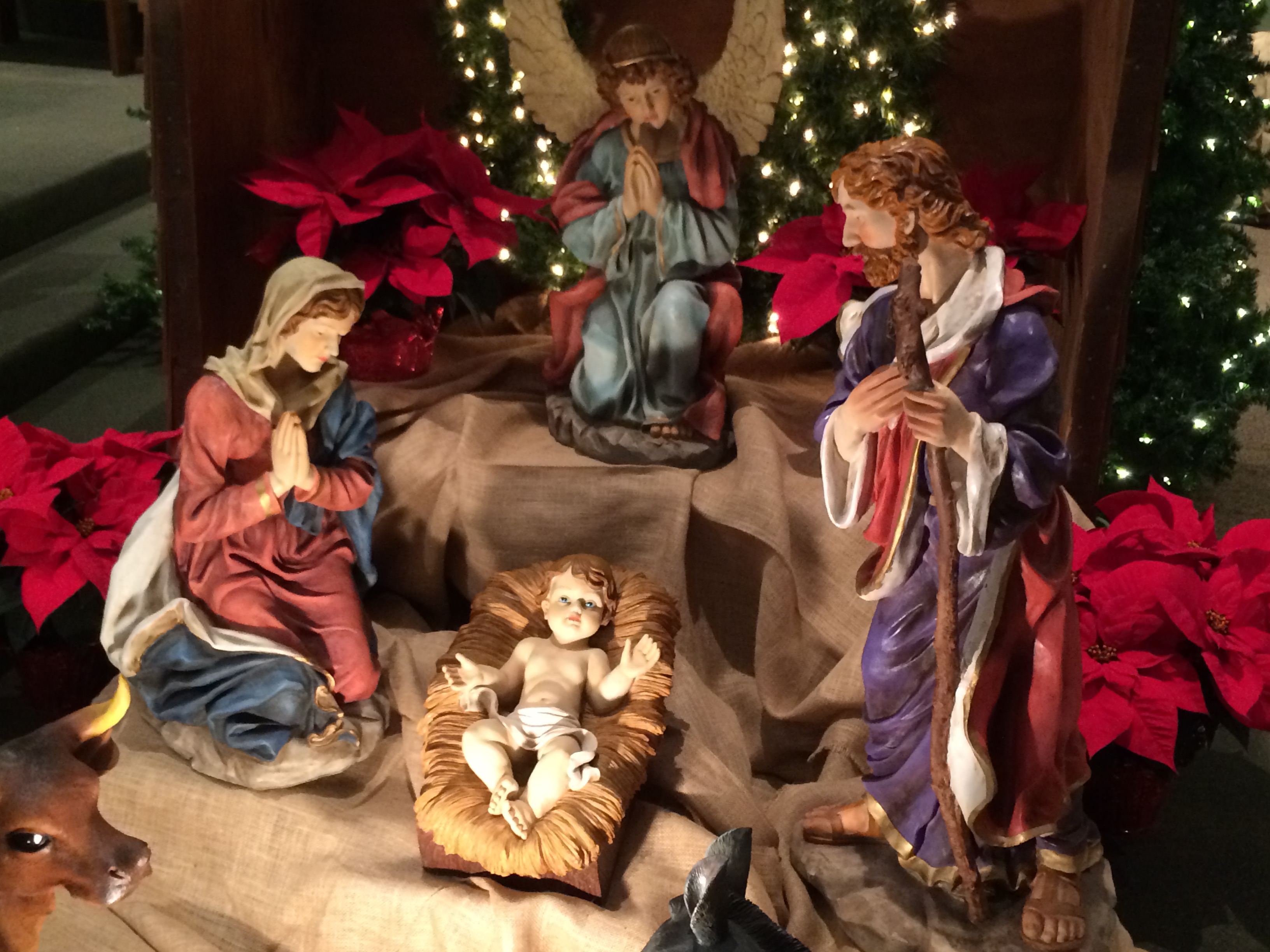
How will my life improve if instead I become a manger, prepared to welcome Jesus Christ into my life not just during Christmas, but every single day?  Jesus arrived in our world not as a majestic king upon a splendid throne, but as an unpretentious baby placed in a humble and lowly manger.  Subsequently, our lives should be that of humble mangers, always ready to welcome Jesus Christ on a daily basis.  As the season of Advent draws to a close and the splendor of Christmas awaits, reflect on the words the angel spoke to the shepherds that most holy night:

“For today in the city of David a savior has been born for you who is Messiah and Lord.

And this will be a sign for you:  you will find an infant wrapped in swaddling clothes and lying in a manger.”

Luke 2:11-12

The social flopping of being offended

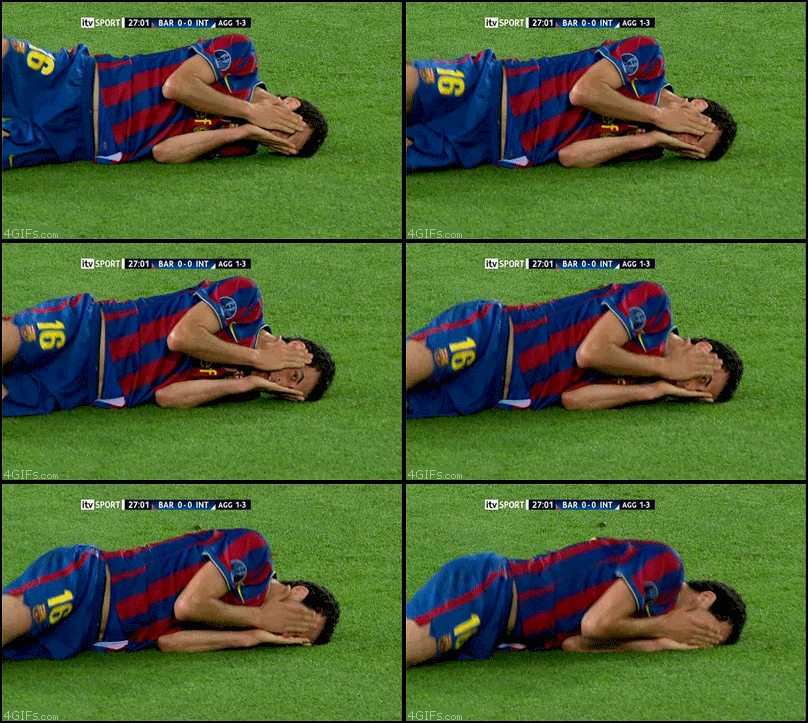
A few weeks ago, much of the world gathered around their televisions to watch the international soccer tournament known as the World Cup.  Anyone that has ever watched a soccer match knows that a few things are guaranteed to happen: very little scoring, boisterous fans cheering and singing, and at least one player falling to the ground in a Shakespearean display of agony if they get bumped, tripped or even touched.  This thespian display is called “flopping” and its whole purpose is to convince the referee and others that the actor/soccer player is a victim of some villainous ploy.  If you watch some of these flops, you would think a prerequisite of being a soccer player is attending the Shatner School of Acting.

earflop

Unfortunately, flopping has crept into other sports such as basketball and American football (thankfully, baseball is a non-contact sport and is immune).  Much worse, flopping has woven itself into the fabric of society, not in the form of any physical display, but in the behavior known as being offended.

Nowadays it seems everyone is offended easily by everything.  We are oversensitive and easily offended by words, actions, and the simplest things.  Just like a sports flop, our being offended usually involves some sort of public overreaction to draw attention to ourselves.  We quickly let everyone else know that we have been offended in an attempt to garner support and sympathy.

peekabooflop

The problem with our being offended is that it is a subjective emotional response by us.  What offends me, may not offend you.  What does not offend me now, may offend me in the future.  Our being offended is subject to our circumstances and feelings; both may change as often as we breath.  We also can be manipulated and persuaded over time to to accept something that once was considered offensive in the past.

There is only one being who can be truly offended, and that is God, for He is Truth and all Truth originates from Him.  From Him comes the objective TRUTH which must be our guide.  When we sin, we offend God.  The Truth that emanates from God does not change, and is the measure by which we should respond to the world around us.  It doesn’t matter if I am offended by something or you are offended by something.  What matters is if it is an offense to God.  In the Catholic Sacrament of Reconciliation we are encouraged to say an Act of Contrition which reminds us that our sins offend God:

“O my God,
I am heartily sorry
for having offended you,
and I detest all my sins
because of your  just punishments,
but most of all because they offend you, my God,
who are all-good and deserving of all my love.
I firmly resolve, with the help of your grace,
to sin no more
and to avoid the near occasions of sin.

Unfortunately, society now embraces the exact opposite.  God and His unchanging Truth have been cast aside and replaced by the moral relativism of being offended.  Today’s society teaches that if something offends you then it is wrong, and if it doesn’t offend you, then it is right.  We have become a society which spends its time being careful not to offend each other, giving little thought to if we are offending God who loves us completely, perfectly and unceasingly.

With all this in mind, let us all strive to be less offended, and resolve to avoid offending God!


Good Grief…

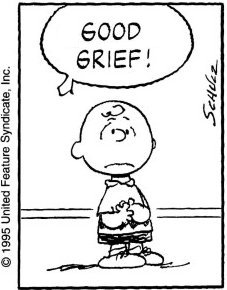
As a child I often enjoyed paging through my family’s collection of the Peanuts cartoon books which focused mostly on a round headed kid, Charlie Brown, and his multi-talented beagle Snoopy. Of course those of us who remember Charlie Brown,Charlie Brown edit or ‘Chuck’, as Peppermint Patty would call him, are familiar with his two word statement that seemed perfect anytime he encountered disappointment, frustration, or guilt. “Good Grief!” was his go to statement, and was perfect in terms of its simplicity and conciseness.

Of course, anyone whoever pondered this exclamation surely noticed that it is also paradoxical.  “Grief” is a profound sense of suffering associated with something that has been lost.  How can we ever consider this to be “good”?  ‘Good’ is something that is considered positive.  ‘Good’ is something we seek out.  How can a profound sense of suffering over lost ever be something considered positive which we might seek out.

And yet today, Good Friday, is a day in which all Christians should be like Charlie Brown and utter a collective “Good Grief!” as we commemorate what our Lord and Savior Jesus Christ did for us.  He became the one true sacrifice for all of our sins, and for that we should indeed grieve today.  And yet because we believe that by His death and resurrection, He has set us free, our grief can indeed be considered ‘good’.

“Yet it was our pain that he bore,

our sufferings he endured.

We thought of him as stricken,

struck down by God- and afflicted,

But he was pierced for our sins,

crushed for our iniquity.

He bore the punishment that makes us whole,

by his wounds we were healed.” – Isaiah 53:4-5

Good grief.  Good grief indeed.

Spiritual Apnea and Pneumatic Devices

Anyone who has been around me while I sleep knows that I have a tendency to snore loudly, and ‘snore loudly’ is an understatement.  I’m fairly certain geologists at the National Earthquake Information Center in Golden, Colorado can look over their seismometer charts and tell exactly when I fall asleep each night.  I am fortunate to livesnoring close to an airport as our neighbors most likely mistake my snoring for commercial aircraft departing in the middle of the night.  I earned the nickname “buzzsaw” from a couple of praise and worship bandmates a few years ago when they were in rooms across from me one time during an annual youth retreat at which our band was playing.

As funny as that all might seem, my loud snoring is an indicator that I suffer from sleep apnea, a condition in which sleep brings about repeated cessations in breathing.  And while my family had been telling me I had this issue, it wasn’t until I went for a sleep study that the message hit home of just how bad it was.  The doctor used the term “severe severe apnea” and the words “shortened life span” jumped at me when I stole a glance at the page that contained the results of my sleep study.  Apparently the chronic stoppage of breathing puts undue strain on the heart which can lead to an enlarged heart.

Fortunately, sleep apnea can be easily corrected with the use of a pneumatic device which is worn at night and keeps the air passages open by supplying air that is slightly pressurized.  After using the machine for only a couple of nights, I immediately noticed a difference in how I was feeling.  Since my body was no longer choking itself while I slept, I was able to enter into the deep sleep stages my mind needed to experience each night.  No longer did I wake up feeling like I hadn’t slept, and the mental fog in which I had been suffering from for Lord knows how long, finally was lifted.

What is amazing about all of this is how unaware I was of the effect my sleep apnea was having on the rest of my life.  It’s much easier to notice suffocation when one is awake.  If you knew that you were depriving yourself of oxygen on a regular basis, you would know why and would be more aware that your body and mind are not functioning to their fullest capability.  But when the suffocation happens when we are asleep, we don’t see the effect since we aren’t aware there is a problem in the first place.

And this apnea can happen to all of us in our lives of faith.  We fall asleep in our faith- sometimes it might be for a long time, or sometimes it might be a short nap.  But it can happen to us on a regular basis.  And when we fall asleep spiritually, we suffer from spiritual apnea.  And we often don’t see the negative effects the spiritual apnea has on our lives because the spiritual suffocation occurs when we aren’t aware.  All of us do things or are exposed to things (temptation) that put us at risk of spiritual apnea (sin).  We become so accustomed to it we don’t realize there is a problem.  We need to be awake spiritually to know when we spiritually stop breathing.  Only then can we address the problem and only then will the effects of sin in our lives be removed.

So how do we know if we are suffering from spiritual apnea?  One of the ways is to do a regular “examination of conscience”.  As the Catholic Church succinctly explains, an examination of conscience is “prayerful self-reflection on our words and deeds in the light of the Gospel to determine how we may have sinned against God”.  This examination can take place on many levels, and focus on different areas of our lives.  One of the simplest examinations offered is how we live our lives according to the 10 Commandments.

Once we are aware of how we suffer from spiritual apnea, how do we correct it?  What are the “pneumatic devices” we can use to overcome our self-induced suffocation?  It is interesting to note that “pneumatic” not only is defined as having to do with air, but also as “of or as relating to the spirit”.  God, our greatest healer and physician, offers us many things to overcome our spiritual apnea.  Regularly reading Holy Scripture, attending church every Sunday, receiving the sacraments are just some of the ways we all can make sure our spiritual airways remain open.  But it is important to remember that none of this is possible unless we are fully awake and aware as to when and how we are spiritually suffocating ourselves.  Don’t fool yourself into thinking you don’t sin.  We all do.  It is in our fallen nature to do so.  To think otherwise is to have fallen asleep spiritually.

I’m glad and fortunate that I finally went in for a sleep study.  It’s probably saved my life.  As much as I must admit that strapping to my face each night a small mask over my nose that has a long hose running from it has improved my sleep, I look silly when I wear it.  Our small Westland Highland White Terrier likes to attack the vacuum cleaner hose whenever my wife is vacuuming.  I’m fairly certain that one of these nights the dog will attack me in my sleep after mistaking the breathing hose for the vacuum cleaner hose.  Hopefully she won’t as I don’t want to explain that to the insurance company…


Of microwaves and “waitlessness”

It is hard to believe we have closed 2015 and ushered in the New Year.  The passage of time seems to go faster as one gets older.

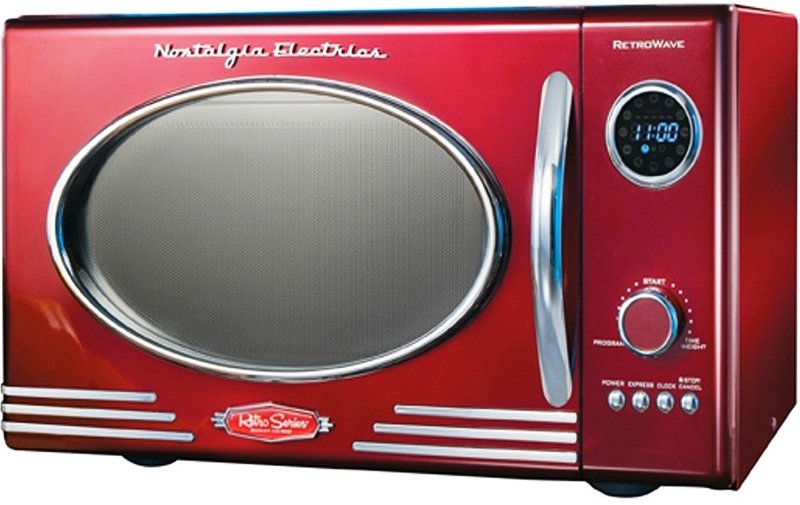
Speaking of time, I think one of the greatest time saving inventions of the modern age has to be the microwave oven.  The fact that within minutes, or even seconds, we can have foods warmed or cooked, liquids boiling, and popcorn popping is amazing to me.  How many of us remember back to our childhoods a time when leftovers had to be warmed in a traditional oven or on the stove top.  Eating leftovers that would get drier and browner with each subsequent warming if one was not a master of mixing just the right amount of heat and a bit of water as the food was reheated.

If you ever want to challenge a family’s routine, simply remove the microwave oven from the kitchen.  There is a sudden feeling of helplessness as a line forms waiting to use the toaster oven or your stomach growls while waiting for an entire pan of roasted whatever and mashed mush to be reheated on the stove.  Our family experienced this just before Thanksgiving when our microwave of 22 years decided to stop working.  Within a day of its demise, I realized that peace in the kitchen would not exist until I visited the local Best Box store and picked up a new microwave.  Waiting more than 5 minutes for food to warm up was a form of torture that no family member should endure- including me!  The breaking of the microwave oven was culinary equivalent of being taken out of a speeding jet airplane and placed into a covered wagon drawn by plodding oxen.

It reminded me of how much we have become spoiled by the concept of what I’mTime Clock going to term “waitlessness”.  We no longer have to wait for much these days.  We have microwaves, drive-thrus, streaming songs, downloadable movies, instant these, and quicker those.  Even the spiritual season of Advent, a time of waiting for our Savior’s arrival, is lost on most of society.  It seems that Advent has been run over by a reindeer.

We often let our secular ‘waitlessness’ creep into our spiritual lives.  We want God to answer our prayers immediately, if not sooner.  We expect that we should be able to send a prayer request off to God, hit the Amen ‘start button’, and *BING*, have the instant results we have requested from Him.  But God does not operate on our time schedule, nor is He required to do so.  He does this for our own good, because He knows what is best for us.

If you look through Scripture, you will see our desire for “waitlessness” was going on long before microwaves graced our kitchens.  God had to repeatedly remind His people that His timing was not theirs.  The Old Testament prophet Habakkuk was frustrated with waiting for God to answer his prayer (Habakkuk 1:2) and God reminded him later that even if God delays in His answer, His answer is never late (Habakkuk 2:3) and that rashness is not a good thing (Habakkuk 2:4).  In Isaiah 49:8 God says “In a time of favor I answer you” showing that He knows not only what is best for us, but also when it is best for us.  In the New Testament, Jesus’s relatives attempt to get Him to go to Judea before He was ready to do so (John 7:1-6), and He tells them “My time is not here…”.  Even after Jesus is crucified and resurrected, the Apostles are waiting impatiently for God to answer their prayers for the restoration of Israel, as evident when they ask Jesus when He’s going to do this.  Jesus gently rebukes them by saying “It is not for you to know the times or seasons that the Father has established by his own authority” (Acts 1:7).  Finally, we all need to remember what Peter mentions in his second letter.  “But do not ignore this one fact, beloved, that with the Lord one day is like a thousand years and a thousand years like one day.” (2 Peter 3:8).  Jesus assures us that God will answer our prayers (Matthew 7:7-11), but it is important to note that He makes no mention of wait times.

So a very Happy New Year to all of you!  May 2016 bring all of us the gift of patience, peace in our spiritual waiting, and of course a working microwave.


Venite adoremus! Dominum.

MangerVenite adoremus! Venite adoremus! Venite adoremus! Dominum.

These wonderful words began ringing out through churches last night and will continue to do so today.  If you don’t recognize the Latin, you will their translation:  “O come let us adore Him! O come let us adore Him! O come let us adore Him! Christ the Lord.”  These words of course are from the Christmas hymn “O Come All Ye Faithful” and were joyously and loudly sung from congregations packed into pews.  It is great to see churches overflowing with people!

As great as it is to see church buildings on the verge of breaking maximum occupancy fire codes on Christmas Eve and Christmas Day, it is rather unfortunate that these massive gatherings only seem to happen twice per year- at Christmas and at Easter.  For whatever reason, church bells on Christmas and Easter draw the zombie “Chreasters” to the local church where they sit uncomfortably in the pews for an hour and then bolt for the door as soon as the final ‘Amen’ is said, not to be seen again until lilies or poinsettias grace the sanctuary.

Of course the traditional Christian PC response is to say “at least they are there”.  But if we are to have a personal relationship with Jesus, how can we do so if we are willing only to stop by His house twice a year?  I don’t think we would think much of a friend or relative who did the same to us, especially if they live close by us.  The bible doesn’t mention anyone who showed up for only Christ’s birth and death, and nothing in between.  We should all make note of that.

So let’s be sure that every Sunday we take time to go to church to adore Christ the Lord!

Venite adoremus!


Be Deliberate in your Giving Thanks

Tomorrow we will be celebrating Thanksgiving.  It is a day in which our homes will be filled with the glorious smells of roasting poultry and other culinary creations, which when voluminously combined in our bellies, will leave us in a sluggish state of gastric nirvana that draws us to the nearest couch.  (Yes, I know many of you probably deep fry your turkeys…but hopefully your house isn’t filled with the smells of a turkey being deep fried because more than likely it will also be filled with the

Each year, turkeys attempt to avenge themselves via deep fryers.

sounds of smoke detectors going off, and a frantic call to 911 to let them know you just set your house on fire.  Be sure to deep fry your turkeys away from your house or anything else you value should that turkey seek to avenge itself from beyond the grave.  That concludes my public service announcement of this blog post….).  But I digress.

In addition to stuffing ourselves with too much food, there will be also the traditional talk and discussion of “what we’re thankful for”.  During this week, young students across the nation are given the assignment to write or draw about something for which they are thankful.  On Thanksgiving Day itself, for anyone watching TV, we’ll get the steady stream of “I’m thankful for…” statements fromthanksgiving2 football players, sports announcers, celebrity parade hosts and other talking heads.  And they’ll all be thankful for the usual feel-good PC things like health, family, friends and country.  All of us will usually say those same things between forkfuls of our second helping of pumpkin pie as well.

But I think we’ve lost the purpose of observing Thanksgiving Day.  We all give thanks for something on Thanksgiving Day.  But in the act of giving, it is implied that there is a receiver.  There is someone to receive that which is being given.  If we are giving thanks, to whom are we giving it?

Which leads me to wonder why those who claim to be atheists celebrate Thanksgiving.  If they are giving thanks, to whom are they giving their thanks?  The universe? Evolution?  Fate? DNA & Richard Dawkins? Karma? Society?  Government? Themselves?  An atheist participating in Thanksgiving Day is nonsensical.  The best they can do is give thanks for something.  Why do they need a national holiday in which they practice good manners (i.e.- saying ‘thank you’)?

And that is where society seems to be stuck as well.  Thanksgiving has become a national holiday in which we frivolously do an accounting of all the good things that we’re thankful for.  And when a holiday becomes frivolous, it becomes expendable.  Have you noticed this year how the retailers have expanded Black Friday into a week long celebration?  The retailers aren’t stupid.  They know as a society we are insatiably greedy, and Thanksgiving is merely just a day to stuff our faces while we politely say a very hollow sounding ‘thank you’ and think of things we’re going to buy the next day.

We as Christians are called to be better than that!  I know Christians will be giving thanks to God on Thanksgiving, and do so most other days as well, but I think in order for Thanksgiving to have meaning again and in order for us to grab it back from the wretched hands of the retailers, Christians need to be even morethanksgiving deliberate and purposeful in our giving thanks to God.  Let’s stop being thankful for stuff on Thanksgiving Day, and simply be thankful to God.  We need to be vocal in reminding others that we are simply thankful to God.  Make it a goal on Thanksgiving to say “I am thankful to God” or “I am thankful to God for….”.  Each of us needs to hear us saying that.  Society needs to hear us Christians being deliberate and purposeful in simply giving our thanks to God.  If your church offers a thanksgiving service or Mass tomorrow, how about attending it?  Society needs to see us Christians being thankful to God as well.

So for this Thanksgiving let’s be deliberate in giving our thanks to God.

Be Not Afraid! (Unless you’re a lab rat in California)

Recently while remodeling our downstairs bathroom, I was surprised to find on our newly purchased vanity, a warning sticker.wood dust warning It wasn’t a label telling me that this solid wood vanity was pricey (I already knew that) or that I should read completely the instructions on how to install it (I didn’t do that). No, it was a warning sticker telling me that the state of California determined that “drilling, sanding, or machining wood products generates wood dust, a substance known to the state of California to cause cancer…”.  Really.  Has anyone warned Norm Abram at the New Yankee Workshop?!?

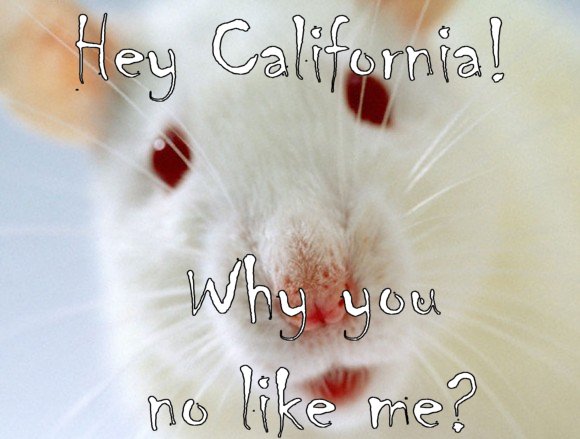
Just what is it about the state of California and their incessant need to find things that cause cancer in lab rats?  Apparently they have a division in their state government that hates rodents and does its best to find ways of slowly killing them via exposure to every known substance on earth.  I’m still trying to figure out just how long it took California to get the lab rats sufficiently trained in wood working in order to conduct these tests.

So while it seems that California should change its official state motto from “Eureka! I have found it” to “Eeek! It’s going to kill me”, we need to be reminded that God does not want us to live our lives in fear.  The inauguration of His plan to redeem the world through His Son Jesus Christ, repeatedly involved the words “Do not be afraid”.  God’s angel Gabriel spoke these words first to Zechariah (Luke 1:13) and to Mary as well (Luke 1:30).  Joseph was also comforted with this same instruction in his dream (Matthew 1:20).

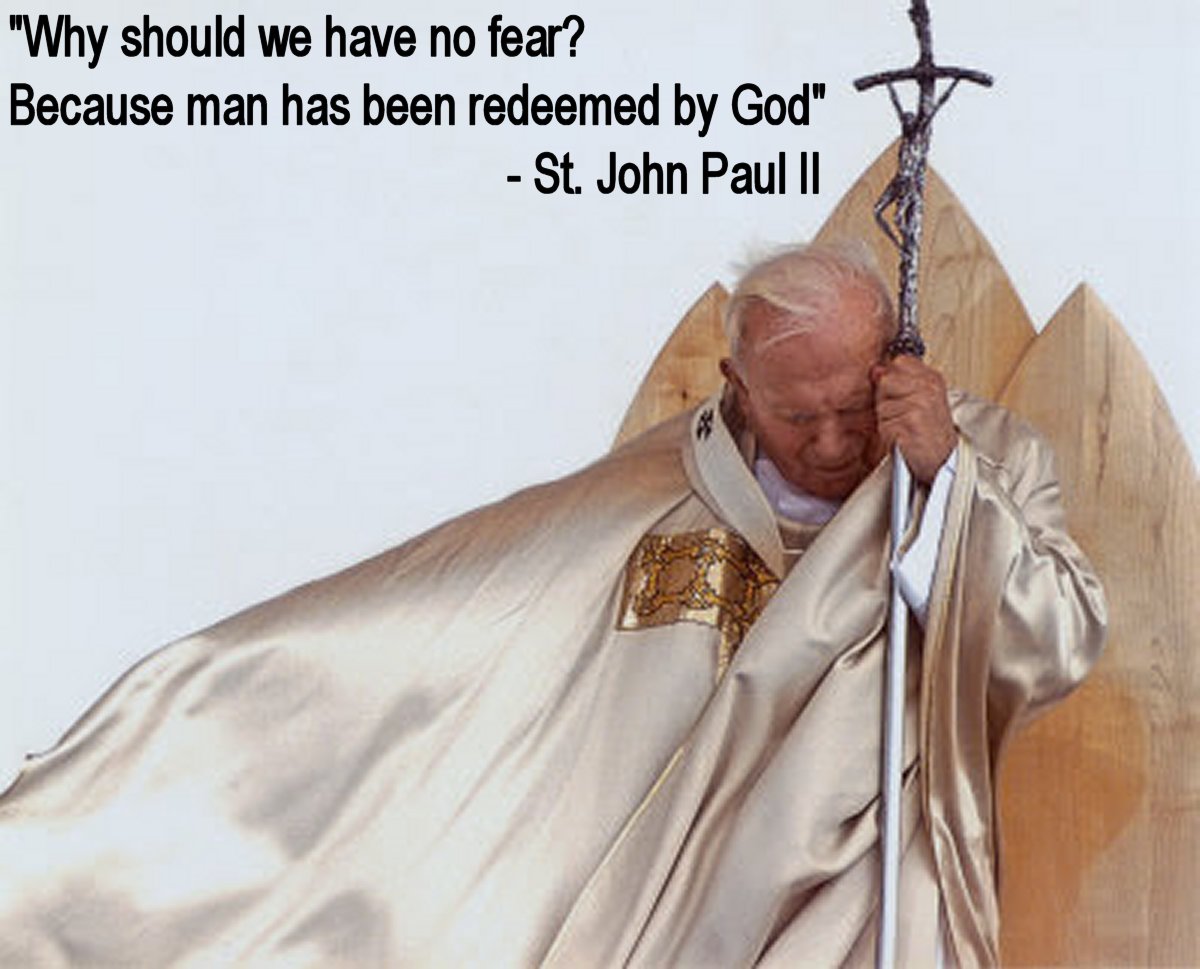
This same theme ran through the pontificate of St. John Paul II, undeniably the Man has been redeemed by Godgreatest pope with which our modern world has been blest.  In his inaugural homily he urged the world to be not afraid: “Brothers and sisters, do not be afraid to welcome Christ and accept his power”; “Do not be afraid. Open wide the doors for Christ”; “Do not be afraid. Christ knows ‘what is in man'”.  He reiterated this in his book ‘Crossing The Threshold Of Hope’ where he succinctly tells us why we should not be afraid: “Why should we have no fear? Because man has been redeemed by God”.  (Insert retroactive MIC DROP by the Pope here).

It’s very easy to live our lives in fear of what may or may not happen, and very easy to be distracted by the fears that governments, the media, or terrorists try to force on us.  We let our imaginations run amuck and before you know it, we’re cowering in a dark corner.  Jesus tells us not to be like that in Matthew 6:34 “Do not worry about tomorrow; tomorrow will take care of itself”.  Jesus wants us out there living out our lives the way God intended-  living them to their fullest potential in glorious praise of Him!


Soldiers of the Church Militant

Earlier this week, our great nation recognized all those who have served in its military by observing Veterans Day.  We are blest to live in this great country, and even more blest that there are men and women courageous enough to defend it and the freedoms we enjoy, and more often than not, take for granted.

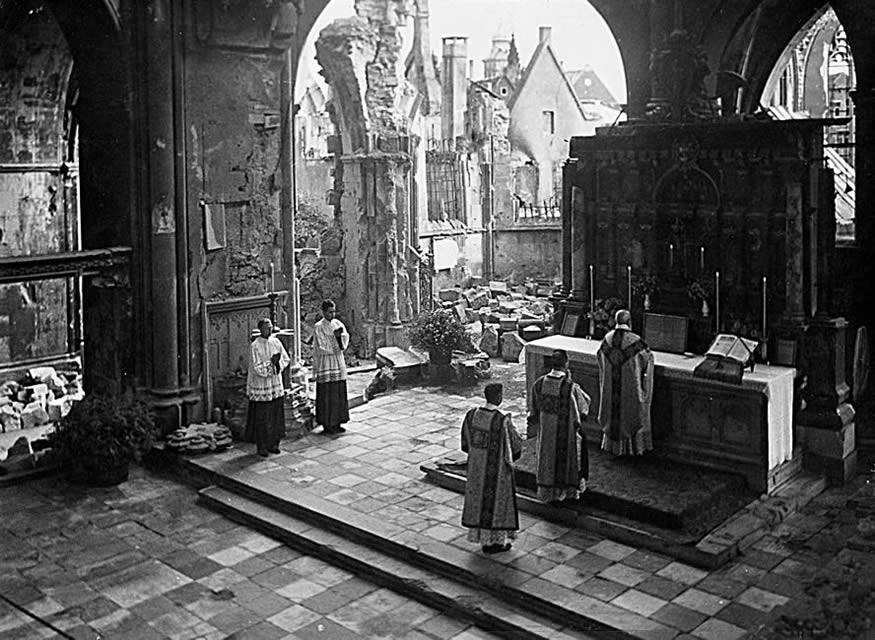
Military soldiers stand guard in the foreground while spiritual soldiers do battle in the background.

And less than 48 hours after observing Veterans Day, we are faced with the stark reality and reminder from the events in Paris that there is a war going on around us all.  It’s not a war that involves generals drawing lines on maps where foot soldiers will be deployed to engage the enemy.  But it is a war that engages us all, for this war is being fought over that thing each one of us has- a soul.

And sometimes this war does involve physical carnage as we have seen in Paris.  There are those who apparently believe that causing bodily harm to another person while yelling that their “god is great” will earn them carnal pleasures in the afterlife.  How foolish and misled are they (Matthew 7:15).  And how even more foolish we will be if we cower in fear and attempt to placate them by giving into their demands.

Jesus warns us all not to fear these evil doers who look to physically harm us:  “And do not be afraid of those who kill the body but cannot kill the soul; rather, be afraid of the one who can destroy both soul and body in Gehenna.” (Matthew 10:28).  Jesus warns us of the more important battle that is going on for our souls.

And in this battle, the enemy uses attack methods that do not involve loud percussive explosions of bright light that will draw our attention.  Satan does this on purpose.  The last thing Satan wants is a sounding of the alarm and additional troops shoring up our defenses against him.  No, he and his followers use the “death by a thousand tiny cuts” technique to destroy our souls.  These attacks are very subtle and go easily unnoticed if we are not paying attention.

The Catholic Church wisely uses the term “The Church Militant” to describe the followers of Christ who are alive in this world.  We are the foot soldiers who are doing battle on a daily basis in a multi-front war in which we are being attacked from all different directions.  We battle the devil.  We battle the world.  We battle ourselves.

The gates of hell will not prevail!

In closing, Ephesians 6:10-17 eloquently invokes the imagery of our daily battle:

“Finally, draw your strength from the Lord and from his mighty power.

Put on the armor of God so that you may be able to stand firm against the tactics of the devil.

For our struggle is not with flesh and blood but with the principalities, with the powers, with the world rulers of this present darkness, with the evil spirits in the heavens.

Therefore, put on the armor of God, that you may be able to resist on the evil day and, having done everything, to hold your ground.

So stand fast with your loins girded in truth, clothed with righteousness as a breastplate,

and your feet shod in readiness for the gospel of peace.

In all circumstances, hold faith as a shield, to quench all flaming arrows of the evil one.

And take the helmet of salvation and the sword of the Spirit, which is the word of God.”